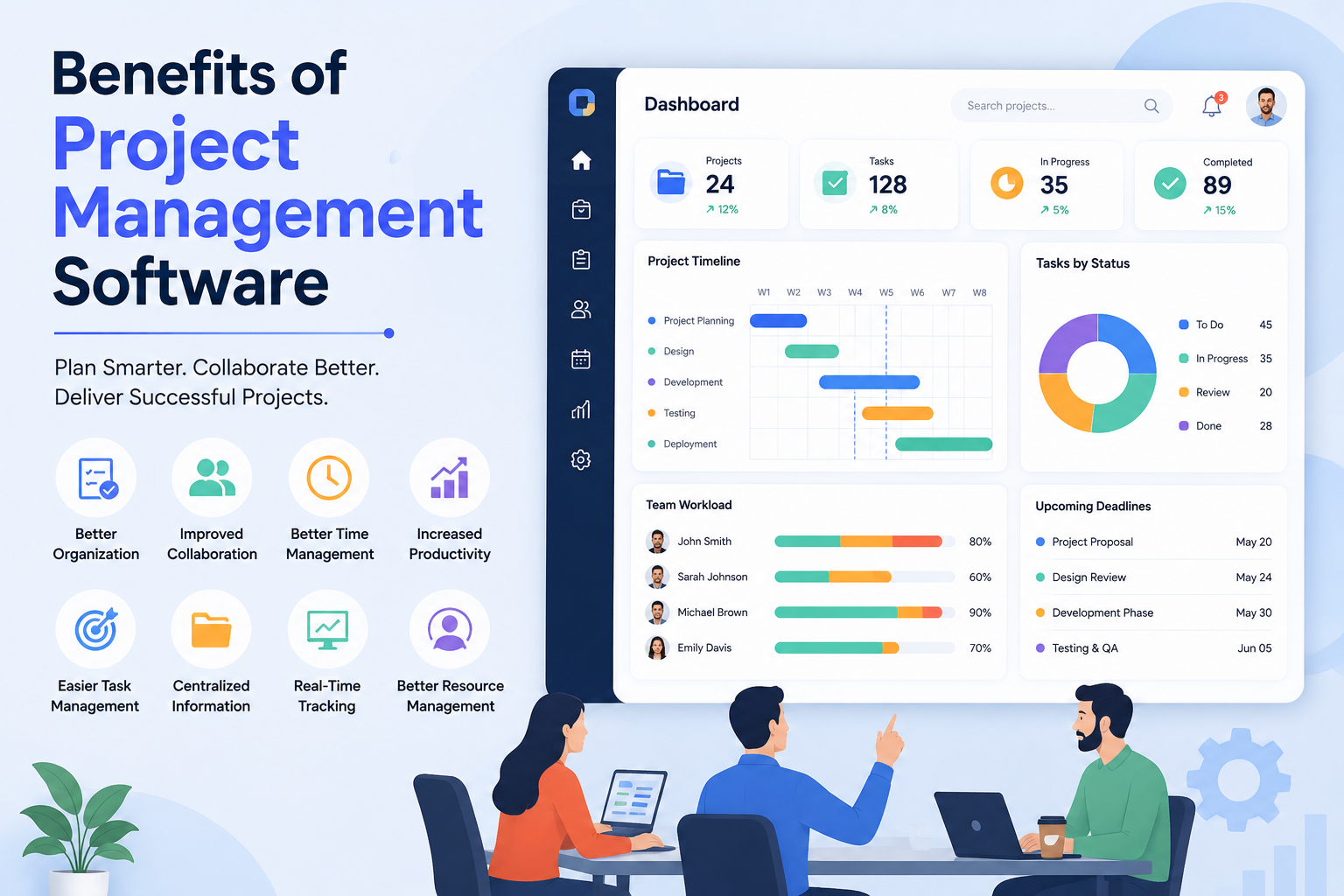
Managing projects effectively can become challenging as businesses grow. Teams have to coordinate tasks, meet deadlines, communicate with clients, manage resources, and keep track of project progress. Using spreadsheets, emails, and separate communication tools can make this process even more complicated.
Project management software provides a centralized platform where businesses can plan, organize, monitor, and manage their projects more efficiently.
What Is Project Management Software?
Project management software is a digital tool designed to help teams plan and manage projects from start to finish. Depending on the platform, it may include features such as task management, project scheduling, team collaboration, time tracking, file sharing, reporting, and automation.
Instead of managing project information across multiple tools, teams can keep important details in one centralized system.
8 Benefits of Project Management Software
1. Better Project Organization
One of the biggest benefits of project management software is improved organization.
Teams can create projects, divide them into tasks, assign responsibilities, and establish deadlines. This gives everyone a clear understanding of what needs to be completed and when.
A well-organized project also makes it easier for managers to identify unfinished or delayed tasks.
2. Improved Team Collaboration
Successful projects require effective communication between team members.
Project management software gives employees a shared workspace where they can communicate, provide updates, share files, and collaborate on tasks.
Rather than searching through long email threads or different messaging applications, team members can access relevant project information from a central location.
3. Easier Task Management
Large projects often contain dozens or even hundreds of individual tasks.
Project management software allows managers to assign tasks to specific employees, set priorities, add deadlines, and monitor completion status.
For example, tasks can be organized into categories such as:
- To Do
- In Progress
- Under Review
- Completed
This makes it easier for teams to understand their workload and priorities.
4. Better Time Management
Deadlines are an important part of project management. Missing deadlines can affect customers, budgets, and overall business performance.
Project management platforms can provide calendars, timelines, reminders, and notifications to help teams stay on schedule.
Some platforms also offer time-tracking features that allow businesses to understand how much time employees spend on specific projects or tasks.
5. Increased Productivity
Manual project management can consume a significant amount of time.
Employees may spend hours updating spreadsheets, searching for documents, sending status emails, or checking task progress.
Project management software can automate many of these activities. By reducing repetitive administrative work, employees can focus more of their time on productive and high-value tasks.
6. Centralized Project Information
When project information is spread across emails, spreadsheets, cloud storage platforms, and messaging applications, important information can easily be missed.
Project management software brings important project information together in one place.
Depending on the platform, teams may be able to access:
- Tasks
- Deadlines
- Documents
- Project updates
- Comments
- Team assignments
- Time records
- Reports
This creates a single source of information for everyone involved in the project.
7. Real-Time Project Tracking
Project managers need to know whether projects are progressing as planned.
Project management software provides dashboards, task statuses, progress indicators, and reports that make it easier to monitor project performance.
Managers can quickly identify:
- Delayed tasks
- Upcoming deadlines
- Completed work
- Team workloads
- Project bottlenecks
This allows problems to be addressed before they significantly affect the project.
8. Better Resource Management
Managing resources effectively is essential for completing projects within budget and on time.
Project management software can help managers understand which employees are working on specific tasks and how resources are being allocated.
This can reduce workload imbalances and help managers assign resources according to project requirements.
Who Can Benefit From Project Management Software?
Project management software can benefit businesses of almost any size and industry.
It can be particularly useful for:
- Software development companies
- Marketing agencies
- Construction companies
- E-commerce businesses
- Consulting firms
- IT companies
- Creative agencies
- Startups
- Remote teams
- Large enterprises
Even small teams can benefit from having a structured system for managing tasks and deadlines.
Project Management Software vs. Spreadsheets
Many businesses start by managing projects using spreadsheets. While spreadsheets can work for simple projects, they can become difficult to maintain as the number of tasks and team members increases.
Project management software is specifically designed for collaboration, task management, scheduling, tracking, and reporting. It can therefore provide greater visibility and automation than a traditional spreadsheet.
How to Choose Project Management Software
Before selecting a platform, businesses should consider their specific requirements.
Look for features such as:
- Task and project management
- Team collaboration
- Calendar and scheduling
- File sharing
- Time tracking
- Notifications
- Reporting and analytics
- Automation
- User permissions
- Third-party integrations
- Mobile accessibility
It’s also important to consider ease of use. A platform with many advanced features may not be useful if employees find it difficult to use.
Conclusion
Project management software can help businesses organize projects, improve collaboration, manage tasks, track deadlines, and increase productivity.
Instead of relying on spreadsheets, emails, and disconnected tools, teams can use a centralized platform to manage their work and gain better visibility into project progress.
As projects become more complex and teams become more distributed, investing in the right project management software can help businesses work more efficiently and deliver projects more successfully.